The first time I watched a “successful” AI pilot fail in a BPO, it wasn’t because the model was bad. It was because the handoffs were bad. The tool helped agents draft replies faster, but the case still bounced between three queues, got reopened twice, and ended up in an escalation meeting where everyone blamed “process gaps” like it was weather.
That day taught me a simple lesson: in BPO, performance isn’t won inside one screen. It’s won in the spaces between screens. If Pop AI can help close those gaps by bringing workflow automation, intelligent routing, and real-time insights into one ecosystem, that’s when bpo ai stops being a demo and starts acting like operations.
BPO leaders are being asked to run faster without getting sloppy. Clients want shorter resolution times, tighter QA, better reporting, and fewer surprises. Agents want tools that reduce friction instead of adding more clicks. Ops managers want fewer fires to put out at the end of every shift.
At the same time, adoption is moving quickly across major delivery hubs. A Bangko Sentral ng Pilipinas publication on GenAI in the Philippine IT-BPM industry notes a 2024 IT-BPM workforce of 1.8 million FTEs and cites an IBPAP survey where 67% of member firms had incorporated AI tools into operations. That kind of momentum changes expectations. “Are you using AI?” becomes “How well is it working in production?”
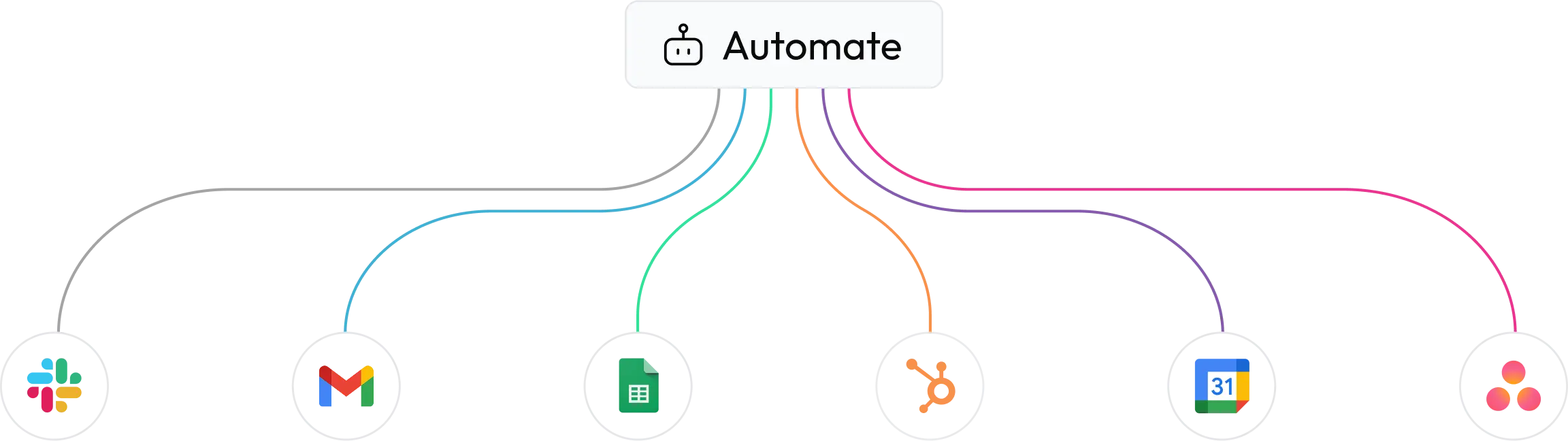
BPO work is built on queues, SLAs, coaching, and repeatability. Tools that ignore those realities tend to create shiny pockets of efficiency while the larger workflow stays messy. The pitch from PopAI Technologies is that it’s aimed at real BPO execution: workflow automation, intelligent routing, and real-time insights in a unified ecosystem, with an emphasis on reducing repetitive work while keeping control.
That framing matters because BPOs do not need magic. They need reliability. They need outcomes that can be tracked, audited, and improved week over week. When AI supports the way BPOs already manage performance, it becomes easier to earn trust from both frontline teams and clients.
PopAI also presents itself publicly as an applied AI company focused on business results, describing tailored AI solutions and a bridge between technology and real-world impact.That positions Pop AI less like a novelty and more like an operational layer.
Better bpo ai performance is not “agents type less.” It’s “the operation gets calmer.” Fewer reopens. Fewer blind escalations. Faster ramp for new hires. Cleaner handoffs between queues. Better compliance consistency. More time spent solving, less time spent searching.
A useful metaphor is a warehouse conveyor system. If the belt speeds up but the sorting stations stay chaotic, packages still pile up and break. Real performance comes when routing, labeling, and exception handling work together. In BPO terms, that means AI is most valuable when it helps the whole flow, not just one task.
Here’s what “stronger” tends to show up as on dashboards:
The best leverage points are the repetitive moments that steal attention: summarizing, classifying, tagging, routing, and building follow-up steps. PopAI’s public messaging highlights workflow automation and real-time insights as part of one ecosystem, which aligns with those high-friction points.
In practice, that can mean reducing the “busywork tax” that turns good agents into tired agents. When the system helps with routine steps, people can spend more energy on judgment calls, empathy, and exceptions. That’s also where client satisfaction often improves, because customers feel the difference between a rushed interaction and a focused one.
A few high-value targets many BPOs start with:
A common mistake is stacking point solutions. One tool drafts. Another tool routes. Another tool reports. The result is a Frankenstein workflow where nobody knows what happened without opening three tabs.
The alternative is orchestration: one layer coordinating the steps and logging actions so ops can manage performance. That’s where a BPO AI workflow becomes a real asset rather than a collection of tricks. It’s not just “AI did something,” it’s “the process moved forward, and we can see every step.”
When orchestration is done well, it also improves continuous improvement. QA findings can lead to workflow adjustments. Root causes can be traced faster. Changes can be rolled out consistently across sites and shifts without relying on tribal knowledge.
Clients do not buy AI. They buy outcomes, plus the confidence that outcomes are repeatable and controlled. That’s especially true in regulated verticals where data handling, access control, and audit trails matter.
If you want bpo ai to survive procurement and client due diligence, you need operational discipline around it:
The BSP publication also flags that GenAI adoption raises job-displacement concerns and highlights the use of AI for augmentation, including chatbots and voice systems that summarize interactions and recommend handling approaches.For BPO leaders, that points to a practical strategy: focus on augmentation that improves quality and speed without undermining control or trust.
Most BPOs do not have the luxury of pausing operations to “implement AI.” The rollout has to happen while queues keep moving. The safest path is small scope, clear measurement, fast iteration.
Start by choosing one queue with three traits: high volume, clear SOPs, and low downside if the automation needs correction. Then make the rollout feel like an operational improvement, not a tech event.
A rollout pattern that tends to work:
After the initial phase, shift the conversation from “Does AI work?” to “Which process change gives the biggest lift next?” That reframes Pop AI as part of continuous improvement, which is how high-performing BPOs already think.
Handle time is easy to track, but it’s not the whole story. Many AI initiatives “win” AHT while quietly increasing reopens, escalations, or compliance risk. That’s like squeezing one end of a balloon and calling it progress.
If you want a stronger business case, tie bpo ai performance to cost, quality, and stability, not only speed. You can do that with a balanced scorecard that ops and clients both recognize.
A practical KPI set:
This also makes reporting cleaner for clients. Instead of “we deployed AI,” you can show “we reduced rework by X, improved QA by Y, and stabilized SLAs during peaks.”
BPO leaders often ask, “Do we need another platform?” The real question is, “Do we need a layer that makes our current tools work together better?” Most BPO environments already have CRM, telephony, ticketing, WFM, and QA tooling. The pain is the gaps between them.
That’s why the AI BPO and PopAI pairing resonates when positioned as a workflow and insight layer, not a replacement for every system. PopAI’s public messaging emphasizes unified workflow automation and real-time insights for BPO operations. If your current stack is strong but fragmented, a unifying layer can improve consistency without forcing a rip-and-replace project.
The best fit is usually a BPO that already has process discipline and wants AI to amplify it, not reinvent it.
If you’re evaluating Pop AI, start with one honest question: where does work leak in our process today? The leaks are usually visible: manual rekeying, slow handoffs, inconsistent triage, missing context on escalations, and QA misses that repeat because the workflow never changed.
Pick one leak, define what “good” looks like, and run a measured pilot that respects live operations. When the pilot improves not only speed but also quality and stability, you’ll have something better than a demo. You’ll have confidence, and confidence scales.
Meta Title: Why Choose Pop AI For bpo ai Performance And Workflow Gains
Meta Description: See how Pop AI can strengthen bpo ai results with smarter routing, workflow automation, QA support, and measurable ROI across BPO operations.
bpo ai refers to using AI tools to improve business process outsourcing work, such as customer support and back-office services. It often includes auto-classifying tickets, summarizing interactions, drafting responses, routing cases to the right team, and reducing after-contact work. The goal is steadier performance: fewer errors, faster resolution, and more consistent service across agents, shifts, and sites.
Start with a high-volume process that has clear rules and repeatable steps, like intake triage or post-interaction summaries. Avoid exception-heavy workflows at the beginning. A good first use case produces visible results in QA, rework, and SLA stability, not only handle time. Once the team trusts the outcomes, expand into more complex queues where judgment and compliance matter.
Yes, when bpo ai supports consistency rather than adding steps. If AI helps agents follow approved templates, surfaces policy reminders at the right moment, and produces clean summaries for handoffs, QA improves with less coaching time. The key is keeping the workflow simple for agents while giving supervisors the visibility to spot trends, correct defects, and refine SOPs based on real data.
The biggest risks are poor inputs, unclear SOPs, and weak governance. If data fields are messy or agents handle the same scenario five different ways, AI output will vary too. Security and privacy also matter, especially with sensitive customer data. Set access rules, log actions, define when human review is required, and track errors so the operation can correct issues quickly.
Go beyond handle time. Track rework, reopen rate, escalations, QA defect trends, and time to proficiency for new hires. Tie the changes to cost of quality, SLA performance during peak volumes, and client satisfaction indicators where you have them. When bpo ai reduces rework and stabilizes delivery, you can show a business case that both finance and clients recognize as real value.